
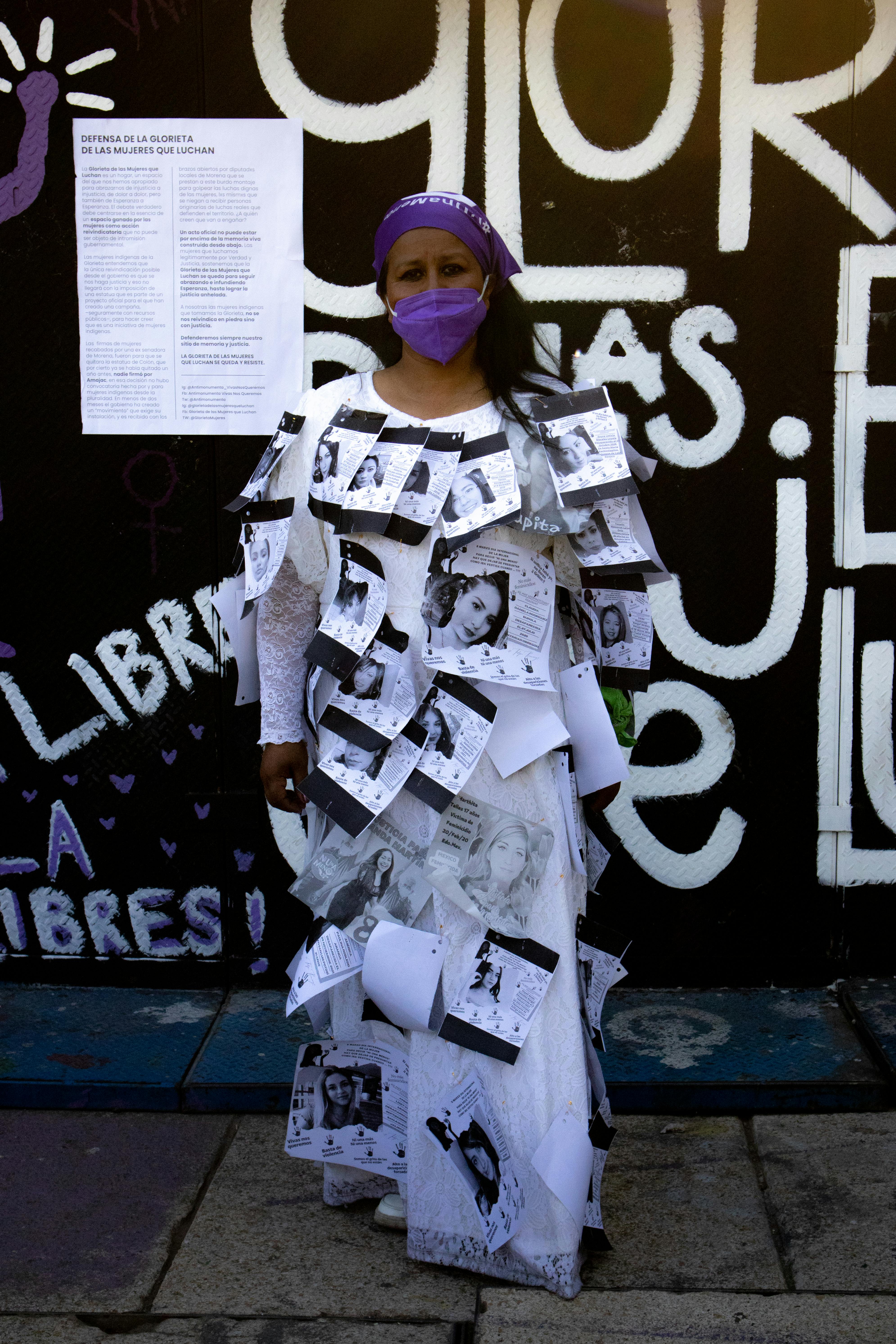
December 6th is Canada’s National Day of Remembrance and Action on Violence Against Women. This date marks the anniversary of the 1989 massacre at École Polytechnique in Montreal, a tragedy that unsettled our collective sense of safety and forced us to confront the reality of gender-based violence in our own country.
On that day, a gunman entered the engineering school with the specific intent of killing women. He separated male and female students, shouting “I hate feminists” before opening fire on the women (Lanthier, 2023). Fourteen young women were murdered simply for pursuing their education in a male-dominated field. Fourteen others were injured. The gunman then took his own life, leaving behind a suicide note that explicitly blamed feminists for ruining his life (Lanthier, 2023).
Even with this clear evidence of targeted violence against women, it took decades for the massacre to be officially recognized as a femicide, as an act of gender-based terrorism (Blais & Dupuis-Déri, 2019). The initial response was also telling: when police and security were first alerted, their delayed action reflected a lack of preparedness for such violence. We couldn’t imagine it happening here, in our safe country, in our institutions of learning.
More than three decades later, we honour those fourteen women: Geneviève Bergeron, Hélène Colgan, Nathalie Croteau, Barbara Daigneault, Anne-Marie Edward, Maud Haviernick, Barbara Klucznik-Widajewicz, Maryse Laganière, Maryse Leclair, Anne-Marie Lemay, Sonia Pelletier, Michèle Richard, Annie St-Arneault, and Annie Turcotte (CBC News, 2024).
But honouring them means more than remembrance. It means acknowledging the ongoing reality of gender-based violence that continues today.
The Weight We Carry
These aren’t isolated incidents from history textbooks. Violence against women is woven into our daily experiences. A friend assaulted while walking home. A family member sexually harassed at work. The ritual of texting after a night out: “Did you get home safe?” The keys held between our fingers. The constant scanning of parking lots. The gut-check before getting into an elevator alone with a stranger.
And the violence hasn’t stopped. In 2024 alone, 187 women and girls were violently killed in Canada (Canadian Femicide Observatory for Justice and Accountability [CFOJA], 2024). That’s one woman or girl killed every other day, on average. Half were killed by a current or former intimate partner. Another 28% were killed by another family member. In 93% of cases where the accused was identified, the accused was male (CFOJA, 2024). These aren’t just statistics. These are daughters, mothers, sisters, friends, partners. These are women who had dreams, futures, people who loved them.
Nova Scotia has had some of the highest rates of femicides in the country. Rural communities and small towns account for 46% of victims, where access to support services is often limited and isolation can increase danger (CFOJA, 2024).
The Crisis of Missing and Murdered Indigenous Women and Girls
The violence is even more devastating for Indigenous women, girls, and Two-Spirit people. Although Indigenous women make up only 4% of Canada’s female population, they represent 16% of all women murdered in Canada (Assembly of First Nations [AFN], n.d.). Indigenous women are 12 times more likely to be murdered than non-Indigenous women, and in some provinces like Manitoba, the rates are even more severe (Human Rights Research and Education Centre, n.d.).
Between 1980 and 2012, over 1,000 Indigenous women and girls were murdered. As of 2015, at least 174 Indigenous women remained missing for at least 30 days under suspicious circumstances. The homicide rate for Indigenous women is almost six times higher than for non-Indigenous women (Statistics Canada, 2023).
The 2019 National Inquiry into Missing and Murdered Indigenous Women and Girls concluded that this pattern represents genocide, a deliberate pattern of violence rooted in colonialism, systemic racism, poverty, and the ongoing effects of residential schools and forced displacement from traditional lands (National Inquiry into MMIWG, 2019).
Indigenous women face this violence in the context of intergenerational trauma, where systems meant to protect them have historically harmed them. From the Sixties Scoop to overrepresentation in the child welfare system to discrimination in healthcare and policing, the layers of systemic failure compound the danger Indigenous women face daily.
This is the water we swim in. And it’s exhausting.
From a therapeutic perspective, what we’re carrying isn’t just fear. It’s trauma. And here’s what’s crucial to understand: trauma isn’t about the event itself; it’s about how our nervous system responds and how that experience becomes encoded in our bodies and minds.
When we lose our sense of safety in our neighbourhoods, workplaces, homes, or relationships, our nervous system goes into protective mode. We become hypervigilant. We scan for threats. We make ourselves smaller. We change our routes, our clothing, our behaviour, trying to stay safe in a world that hasn’t kept us safe.
Shame: The Trauma Response We Don’t Talk About Enough
One of the most insidious responses to trauma is shame. And shame thrives in silence.
Shame tells us: I should have known better. I shouldn’t have been there. I should have fought back. I’m damaged now. I’m too sensitive. I’m making too big a deal of this.
But here’s the truth that bears repeating: The shame we feel? It doesn’t belong to us. We’ve been carrying something that was never ours to carry.
Shame is what happens when trauma meets a culture that blames victims instead of perpetrators. When we’re asked what we were wearing instead of why someone chose to harm us. When our fear is dismissed as paranoia. When speaking up costs us more than staying silent.
Healing Happens in Connection
From a trauma-informed lens, healing isn’t about “getting over it” or “moving on.” It’s about:
- Reconnecting with our bodies after trauma has taught us to disconnect from physical sensations
- Finding our voices after being silenced or dismissed
- Rebuilding trust in ourselves, in select others, in the possibility of safety
- Releasing the shame that was never ours and placing accountability where it belongs
- Creating communities where survival isn’t a solo journey
If you’ve experienced violence, whether physical, sexual, emotional, or psychological, please know that your response is valid. Your fear is rational. Your anger is justified. And your healing is possible.
You don’t have to carry this alone. Therapy, support groups, trusted friends, crisis lines…these aren’t signs of weakness. They’re acts of reclaiming what violence tried to take from you.
Moving Forward with Action
Remembering the fourteen women of École Polytechnique means committing to action:
- Believe survivors when they speak
- Challenge misogyny when we see it—even in small comments
- Support organizations working to end gender-based violence
- Teach the next generation about consent, respect, and equity
- Create spaces where women and gender-diverse people can exist without hypervigilance
We honour their memory not just by lighting candles, but by refusing to accept violence as inevitable. By building a world where education, safety, and dignity aren’t luxuries but guarantees.
You Don’t Have to Carry This Alone
If you’ve experienced violence, whether it happened in your home, your relationship, your workplace, or on the street, I want you to know something: Healing is possible, and you deserve support that understands your whole story.
For many second-generation Canadians, navigating violence and trauma comes with additional layers of complexity. You might be carrying cultural expectations about staying silent, keeping family matters private, or protecting your community’s reputation. You might worry that speaking up means betraying your heritage or disappointing your parents. You might feel caught between two worlds—the Canadian values you grew up with and the cultural traditions of your family.
And if you’ve experienced intimate partner violence, the shame can feel even heavier. Society often asks: Why didn’t you just leave? But those of us who understand trauma know it’s never that simple. Love and fear can coexist. Cultural pressures, immigration status, financial dependence, and concern for children create complex barriers that outsiders don’t see.
Here’s what I need you to hear:
The shame you’re carrying? It doesn’t belong to you. It belongs to the person who chose violence. It belongs to systems that failed to protect you. It belongs to cultures, both Canadian and others, that have normalized aggression and silenced survivors.
Your fear is not weakness. It’s your nervous system trying to protect you.
Your anger is not “too much.” It’s a healthy response to injustice.
Your need for support is not a burden. It’s human.
Healing looks different for everyone, but it often includes:
- Finding a therapist who understands cultural context and intergenerational trauma
- Reconnecting with parts of yourself that violence tried to silence
- Building relationships where safety isn’t conditional
- Learning that you can honour your culture while also setting boundaries
- Understanding that leaving (a relationship, a situation, a pattern) isn’t betrayal but self-preservation
Speaking your truth, in therapy, to a trusted friend, in a support group, or even just to yourself first, is one of the most courageous things you can do. And you get to do it on your timeline, in your own way.
Ready to Start Your Healing Journey?
You don’t have to navigate this alone. As a therapist specializing in working with second-generation Canadians and survivors of intimate partner violence, I provide a safe, culturally-informed space where your entire experience is welcomed and understood.
Whether you’re just beginning to name what happened to you, or you’re ready to release the shame and reclaim your sense of safety, therapy can help.
Book a free 15-minute consultation today to see if we’re a good fit. Let’s talk about what healing could look like for you—on your terms, at your pace.
[BOOK YOUR FREE CONSULTATION] .You can also reach me at Jessica.batres.rf@gmail.com.
In Crisis? Please Reach Out:
- Assaulted Women’s Helpline: 1-866-863-0511 (24/7)
- Kids Help Phone: 1-800-668-6868 (24/7)
- Talk 4 Healing (Indigenous support): 1-855-554-4325
- Fem’aide (Francophone support): 1-877-336-2433
- Crisis Services Canada: 1-833-456-4566
References
École Polytechnique Massacre:
- The Canadian Encyclopedia. (2023). Montreal Massacre. Retrieved from https://www.thecanadianencyclopedia.ca/en/article/montreal-massacre
- CBC News Archives. (1989). The Montreal Massacre. CBC Digital Archives.
- Government of Canada. (2024). National Day of Remembrance and Action on Violence Against Women. Retrieved from https://women-gender-equality.canada.ca/en/commemorations-celebrations/violence-against-women.html
Additional Resources on Gender-Based Violence in Canada:
Statistics Canada. (2023). Gender-based violence and unwanted sexual behaviours in Canada. Retrieved from https://www150.statcan.gc.ca
Leave a Reply